- +977-9817826183
- info@janakicable.com


How to Evaluate Cable Quality Before, During, and After Installation in Nepal?
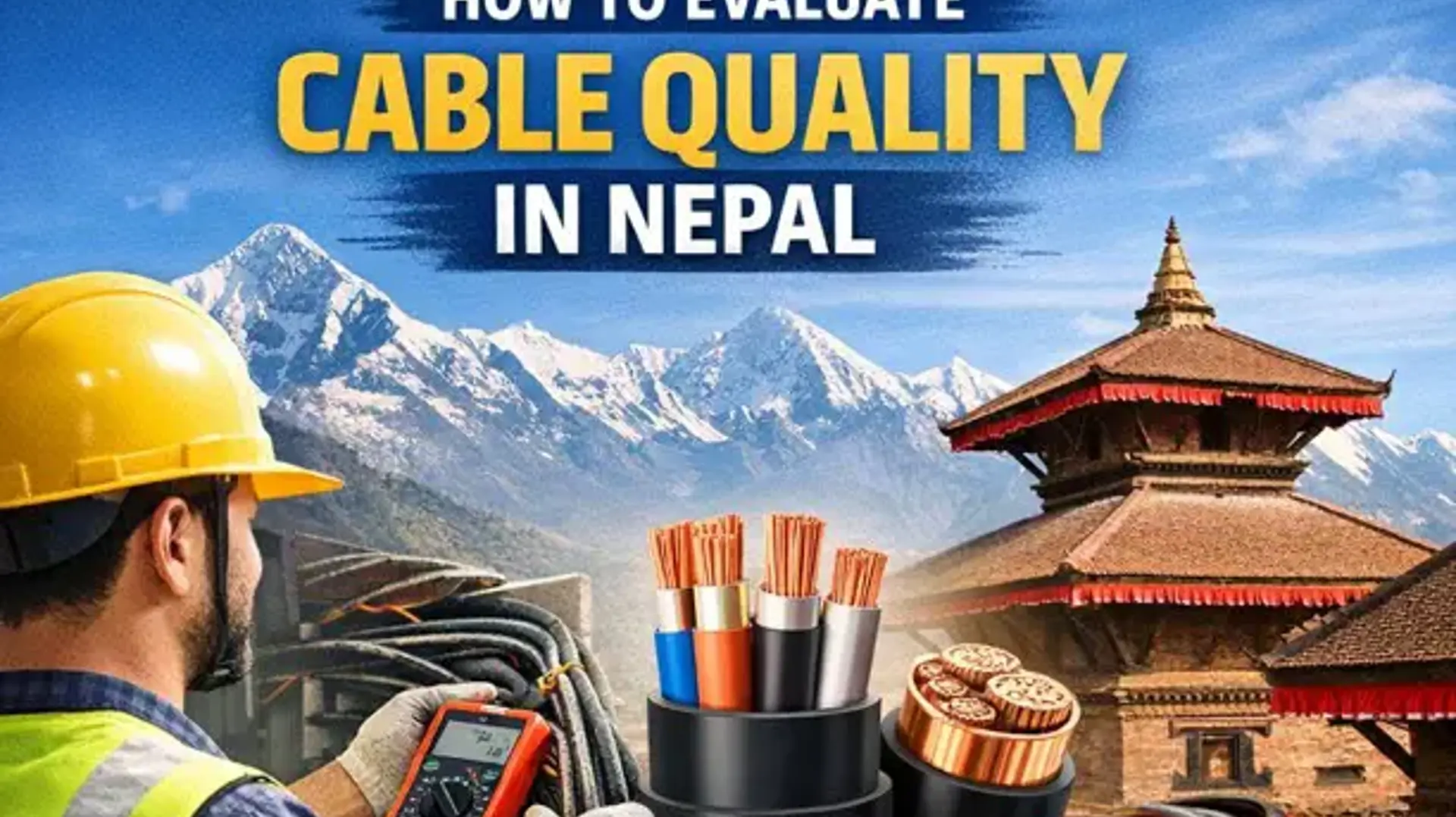
From Factory to Field: How to Evaluate Cable Quality Before, During, and After Installation in Nepal
Ensuring electrical safety and performance starts with choosing high-quality cables. In Nepal, contractors, industrial buyers, and homeowners often face challenges identifying genuine, reliable cables. This guide from Janaki Cable Industry explains how to evaluate cable quality at every stage—from manufacturing to installation.
Why Cable Quality Is More Than Just Certification
While certifications like ISO, ROHS, and European standards are essential, they are only the first step. True cable reliability depends on:
Conductor purity: High-quality copper or aluminum ensures minimal resistance and heat generation.
Insulation integrity: Proper insulation thickness prevents leaks and fire hazards.
Quality control processes: Strict monitoring during production ensures consistency across batches.
Learn more about our certifications that guarantee performance and safety.
What to Check at the Manufacturing Stage (Before Purchase)
Before purchasing cables, inspect these critical factors:
| Check | Why It Matters | How Janaki Ensures It |
|---|---|---|
| Conductor purity | Reduces heat & energy loss | High-grade copper/aluminum with 99.9% purity |
| Insulation | Prevents leakage & short circuits | XLPE, FRLS, and PVC insulation |
| Batch traceability | Avoids counterfeit products | Barcode system & production records |
| Packaging integrity | Protects cable during transit | Moisture-proof reels & secure wrapping |
For product options, visit our cable wiring products in Nepal page.
On-Site Cable Inspection Checklist (Before Installation)
Before installation, contractors should check:
Visual defects: cracks, dents, or scratches
Diameter & specification mismatch
Packaging red flags: moisture, damaged reels
Label verification: ensure correct type and batch number
See our cable wire price list for verified products.
Common Installation Mistakes That Reduce Cable Life
Even high-quality cables can fail if installed incorrectly. Watch out for:
Over-bending cables beyond recommended radius
Poor jointing or crimping of connectors
Using the wrong lugs or connectors
Ignoring cable type guidelines (XLPE, FRLS, multi-core)
Learn more about multi-core flexible cables and proper installation practices.
Post-Installation Warning Signs of Cable Failure
Monitor installed cables regularly for early signs of issues:
Heat spots along the cable path
Voltage drops or inconsistent performance
Discoloration of insulation
Unusual smells or smoke
Early detection prevents equipment damage and fire hazards.
How Nepal’s Climate & Terrain Affect Cable Performance
Nepal’s unique environment poses extra challenges for cable performance:
High humidity & monsoon rains → risk of insulation corrosion
Hilly terrain & remote locations → tension on overhead cables like ABC and stay wires
Extreme temperature variations → affect PVC and XLPE insulation
Janaki cables are designed to withstand Nepal’s climate and terrain, ensuring safe and reliable electricity.
Why Lifecycle Quality Matters More Than Initial Price
Choosing cheap cables may save money initially but often leads to early failures, repair costs, and safety risks. Lifecycle quality ensures:
Long-lasting performance in homes, schools, hospitals, and industries
Reduced maintenance and replacement costs
Safer environments for everyone
Janaki cables undergo strict QC at every stage to guarantee long-term reliability.
Cable Quality Checklist
A checklist for contractors and electricians:
Pre-Purchase: Conductor, insulation, batch traceability
Pre-Installation: Visual defects, diameter, labels
Installation: Bending, jointing, connectors
Post-Installation: Heat spots, voltage drops, discoloration
Use this guide to ensure every installation meets the highest safety and performance standards.
Frequently Asked Questions (FAQ)
Q1: How can I check cable quality in Nepal?
A: Verify conductor purity, insulation thickness, batch traceability, and visual integrity. Janaki cables meet strict quality standards.
Q2: What are common cable installation mistakes?
A: Over-bending, poor jointing, and incorrect connectors reduce cable life.
Q3: Why is lifecycle quality more important than price?
A: High-quality cables prevent failures, save costs over time, and ensure safety.
Important Links